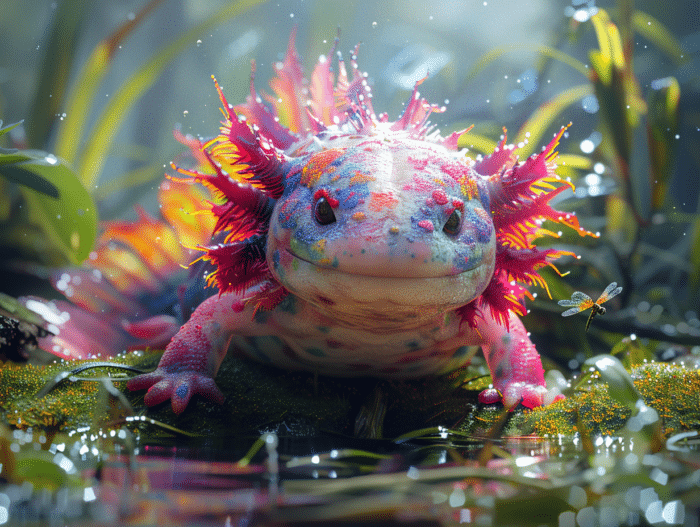
The animal kingdom is filled with an incredible variety of creatures, some familiar and others strangely unknown. Among this amazing biodiversity, there are species that defy imagination, equipped with unique characteristics and often adapted to very specific ecological niches. These rare and unusual animals, often away from the spotlight, constitute a precious biological treasure, reflecting nature’s evolutionary ingenuity. Exploring these atypical forms of life leads us to question our understanding of biology and to push the boundaries of what we consider normal or possible in the animal world.
Exploration of Rare and Unknown Species in the Animal Kingdom
Scientific investigation and natural curiosity drive us to uncover rare species and unknown animals that inhabit the fringes of our knowledge. These creatures, often eclipsed by the media presence of their more familiar cousins, are nonetheless key players in biodiversity. Take, for example, the animal starting with Q, the quokka, an adorable marsupial from Australia, whose rarity and permanent smile fascinate as much as they alert us to the fragility of its habitat. Species diversity is a reflection of the health of our ecosystems, and its protection must be a priority.
The natural habitats of these animals are living laboratories, essential for understanding ecological diversity. However, zoos, despite their conservation efforts, represent only a small fraction of known species and are far from being able to replicate the complexity and integrity of ecosystems. Consider that captivity, despite its best intentions, can induce undesirable genetic changes, thus distancing these animals from their original wild essence.
Attention is also focused on endangered species, those that, without intervention, could soon become nothing more than a memory. Genetic diversity, which is at the heart of species’ adaptability and survival, is threatened when wild populations collapse. Ex situ conservation programs, such as those conducted by zoos, aim to maintain this diversity but must operate within the limits of their own capacity to simulate natural conditions.
Faced with the complexity of these issues, zoos often find themselves at the center of controversies, justifying their actions through species conservation while sometimes practicing management euthanasia for reasons of genetic sustainability. These institutions participate in international programs and are represented by organizations such as EAZA, which brings together European zoos, thus highlighting their role in global conservation. However, the question remains: how to balance the imperatives of preservation with the realities of managing captive populations?
Impact and Preservation of Biodiversity in the Face of Unusual Species’ Uniqueness
The preservation of biodiversity takes on a crucial dimension when considering the uniqueness and vulnerability of unusual species. These species, by their very existence, pose a considerable challenge for biologists and conservation managers. The multiplicity of life forms and their interdependencies underscore the need for a holistic approach to conservation. Zoos, often perceived as mere exhibition spaces, justify their existence through their contribution to species conservation. Indeed, they are key players in maintaining genetically viable populations for species whose natural habitat is compromised.
These institutions are not without controversy, particularly with the practice of management euthanasia, aimed at preserving genetic diversity within confined populations. This measure, as difficult as it may be to accept, reflects one of the paradoxes of modern conservation: the sacrifice of individuals for the benefit of the species’ longevity. Zoos are also involved in international programs, such as those coordinated by the European Association of Zoos and Aquariums (EAZA), to strengthen their conservation efforts and share ethical and sustainable practices.
The role of zoos in ex situ conservation must be accompanied by resolute action for the protection of natural habitats. Collaboration with local and international initiatives is essential to ensure the sustainability of species in their original environment. The sustainability of biodiversity cannot rely solely on the efforts of zoos but requires a comprehensive conservation policy that combines habitat protection, anti-poaching efforts, climate change mitigation, and pollution control.