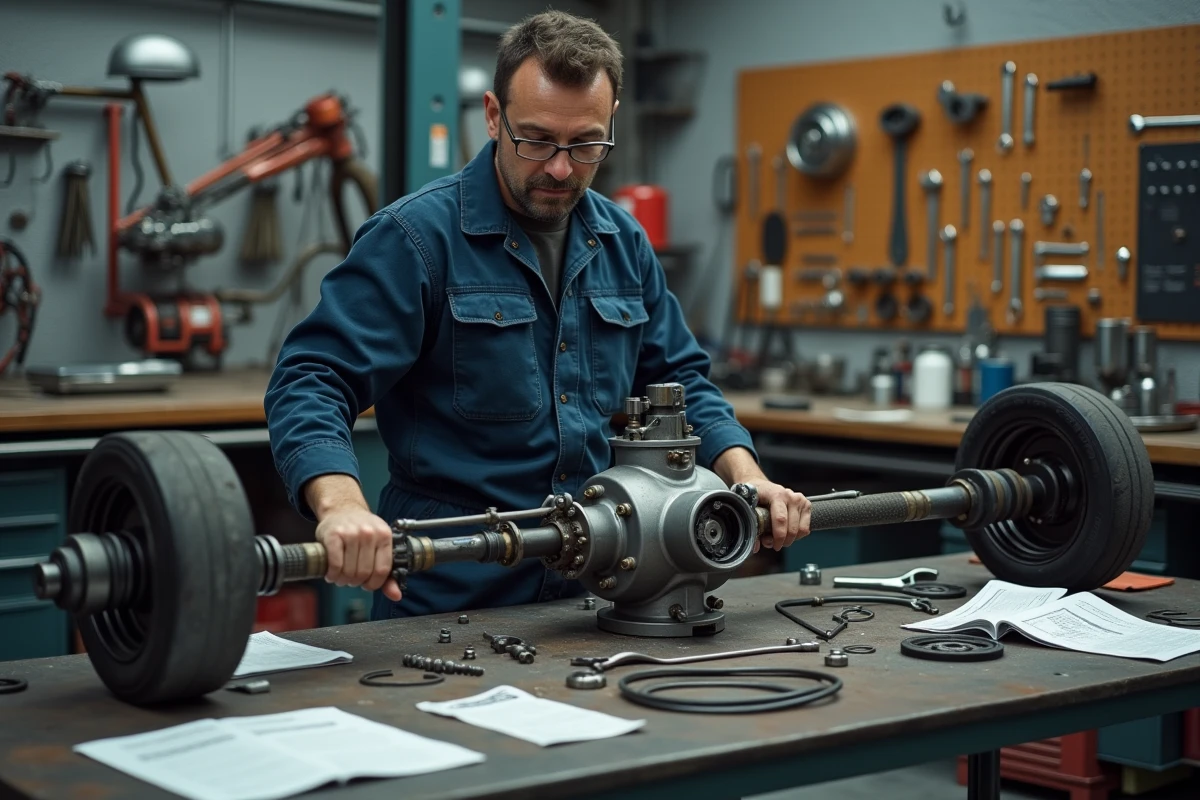
Converting a two-wheeled motorcycle into a trike raises a question rarely asked beforehand: what level of technical modification separates a reliable setup from a risky DIY job? The transformation of a motorcycle into a trike is not limited to bolting on a rear axle. It involves the chassis, braking, suspension, and registration document. This article measures the gaps between the main conversion approaches and identifies the technical points that determine the safety of the final result.
Chassis, suspension, and braking: the three areas that change everything in a trike conversion
The majority of online guides present motorcycle-to-trike conversion as an accessible project. The technical manuals from kit manufacturers tell a different story: the modifications simultaneously affect the chassis, suspension, rear axle, wheels, and braking. Ignoring any one of these areas compromises road handling.
The chassis undergoes lateral stresses absent in a conventional motorcycle. A trike does not lean in turns, redistributing forces to the rear axle and the kit’s mounting points. Serious manufacturers provide frame reinforcements specific to the motorcycle model, not generic plates.
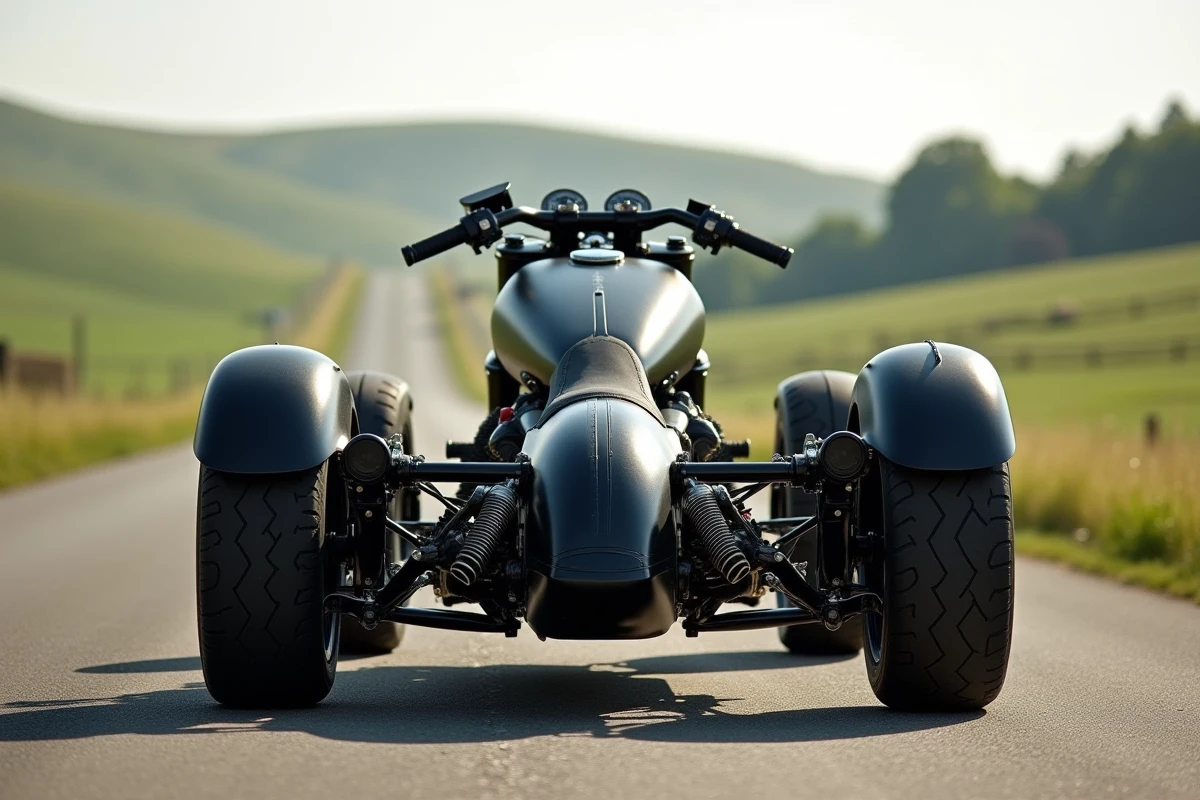
The rear suspension changes from a central shock absorber (or two side ones) to a double-arm system or independent suspension on each rear wheel. This change alters the vehicle’s dynamic behavior. An inappropriate adjustment can cause understeering or instability during braking.
The rear braking system, often overlooked, must be resized. Two rear wheels involve a duplicated braking circuit or a force distributor. Installing a kit without adapting the braking system is akin to riding with a permanent imbalance between the front and rear.
Several resources detail how to easily transform a motorcycle into a trike by identifying these technical areas one by one, which remains the most reliable method to avoid unpleasant surprises.
Trike conversion kit: model compatibility and market limits
A conversion kit is not a universal product. The current commercial offering targets specific models, mainly Harley-Davidson (FL series, Softail, Sportster) and Honda Gold Wing. Each kit is designed for a specific year and frame architecture.
| Motorcycle Base | Common Kit Type | Rear Suspension | Year Compatibility |
|---|---|---|---|
| Harley-Davidson FL (Electra Glide, Road King, Street Glide) | Gladiator (Motor Trike) | Independent | 1997-2024 |
| Harley-Davidson Sportster 883/1200 | GTX-Sportster (Motor Trike) | Independent | 2004-2022 |
| Harley-Davidson Softail / Fat Boy | Spartan (Motor Trike) | Independent | 1997-2017 |
| Honda Gold Wing GL1800 | Roadsmith / Hannigan Kits | Independent | Depending on generation |
| Honda VTX 1300/1800 | Dedicated Motor Trike Kits | Independent | Depending on series |
This table reveals a reality: conversion is industrialized for a handful of platforms, not for all motorcycles. Trying to adapt a kit designed for a Gold Wing to a European touring motorcycle or a Japanese roadster exposes one to issues of axle spacing, mounting, and geometry.
On the other hand, manufacturers like Eritrik in Normandy offer custom transformations for various bases (Indian, Triumph, Kawasaki, Victory), but these services fall under artisanal manufacturing, with significantly higher costs and timelines than a catalog kit.
Homologation and registration document: the often underestimated administrative constraint
Installing a kit is not enough to ride legally. In France, transforming a motorcycle into a trike involves a modification of the registration document and, depending on the case, a homologation process. The vehicle changes category: it goes from L3e (two-wheeled motorcycle) to L5e (motor tricycle).
The procedures vary depending on the nature of the transformation:
- A kit homologated by the manufacturer with a compliance report simplifies the process. The holder submits a file to the prefecture with the manufacturer’s report and obtains a new registration document.
- An artisanal transformation or a kit without French homologation requires a visit to the DREAL (Regional Directorate for the Environment, Planning and Housing) for an isolated acceptance (RTI). This procedure includes technical checks on braking, lighting, structure, and emissions.
- Riding without updating the registration document exposes one to vehicle immobilization and a fine. Insurance may also refuse to cover a claim if the vehicle does not comply with its administrative declaration.
Planning these steps before purchasing the kit prevents ending up with a trike that cannot be used on open roads.
Trike conversion at the end of a motorcycling life: a usage that guides technical choices
Feedback from manufacturers converges on one point: trike conversion mainly concerns experienced motorcyclists facing reduced mobility or approaching retirement. This user profile alters technical priorities.
Stability at rest and low speed becomes the main criterion. A trike does not fall over when stopped, eliminating the need to balance several hundred kilos. Kits with independent rear suspension offer better comfort on degraded roads than a rigid axle, a crucial factor for long trips.
Ease of access also matters. Some kits include a rear trunk between the two wheels, lowering the center of gravity and facilitating loading. Others add a footrest or modify the seat height.
Pure performance takes a back seat. A trike weighs significantly more than an original motorcycle, which reduces acceleration and increases braking distances. The choice of kit should prioritize the quality of braking and suspension over power.
Transforming a motorcycle into a trike remains a technically engaging project. The determining factor is neither the price of the kit nor the brand of the motorcycle, but the compatibility between the chosen kit, the exact model of the vehicle, and the administrative compliance of the result. An approved kit, installed by a qualified professional and followed by an updated registration document constitutes the only configuration that guarantees both safety and legality on the road.