
Special K cereals hold a special place on the shelves: positioned as a light breakfast option, they benefit from a “slimming” image that the Nutri-Score and recent reformulations require us to nuance. Comparing their nutritional profile to that of other common cereals allows us to measure what this morning bowl truly provides, and what it does not compensate for.
Nutri-Score and Reformulation: What Special K Labels Reveal Since 2022
From 2021-2023, Kellogg’s has reformulated several Special K references in Europe to reduce added sugar, particularly in the UK, Spain, and Belgium. This initiative is part of government reformulation programs, and Kellogg’s UK announced in 2022 a significant reduction in sugar for certain flavored varieties.
In France, the introduction of the Nutri-Score has changed the immediate perception of the brand. Some flavored references (chocolate, red fruits) receive a less favorable Nutri-Score than oatmeal or plain muesli, despite Special K’s historical dietary reputation. This gap between marketing image and official nutritional ranking deserves attention regarding the actual composition of the product.
To better understand the benefits of Special K cereals, it is important to distinguish the Nature version from the flavored variations, which have significantly different sugar and fat contents.
Comparison Table: Special K Nature vs. Breakfast Cereals

The table below compares the nutritional profile of Special K Nature with other common cereals, based on information available on packaging and official product sheets.
| Criterion | Special K Nature | Oat Flakes | Classic Corn Flakes |
|---|---|---|---|
| Whole Grains | Partially (rice, wheat) | Yes (whole oats) | No (processed corn) |
| Added Sugars | Present (decreasing after reformulation) | Absent or very low | Present |
| Fiber | Moderate content | High content | Low content |
| Proteins | Average content | Medium to high content | Low content |
| Fats | Low | Moderate (natural lipids) | Very low |
| Indicative Nutri-Score | Variable by variety | Generally A or B | Variable (often B or C) |
This comparison highlights a central point: Special K Nature is positioned between highly processed cereals and raw whole grains. The product is neither the best nor the worst nutritional choice on the shelf, but its value largely depends on what is added around it.
Sugars and Fiber in Special K Cereals: Where the Imbalance Lies
The sugar content remains a sensitive topic. Despite reformulation efforts, chocolate or red fruit flavored varieties retain higher sugar levels than the Nature version. For a breakfast consumed daily, this difference accumulates over the week.
In terms of fiber, Special K Nature has a moderate content. This is better than corn flakes, but significantly lower than an oatmeal or wheat bran muesli. However, fiber at breakfast directly influences satiety until the next meal.
The combination of moderate sugar and average fiber explains why some consumers feel early hunger in the morning after a bowl of Special K alone, without the addition of proteins or fats.
Proteins and Satiety: An Often Underutilized Lever
Special K contains a moderate amount of protein, primarily from rice and wheat. This content alone is not sufficient to meet the morning protein needs of an active person or someone who exercises regularly.
To boost the protein intake of a bowl of Special K, several practical options work:
- Add cottage cheese or plain yogurt, which provides dairy proteins and improves the texture of breakfast without excess sugar
- Incorporate a handful of nuts or almonds, which also complement the intake of healthy fats and fiber
- Pour semi-skimmed milk instead of sweetened plant milk, to maintain a balance between proteins and added sugars
Special K and Weight Management: What Nutritional Data Allows Us to Conclude
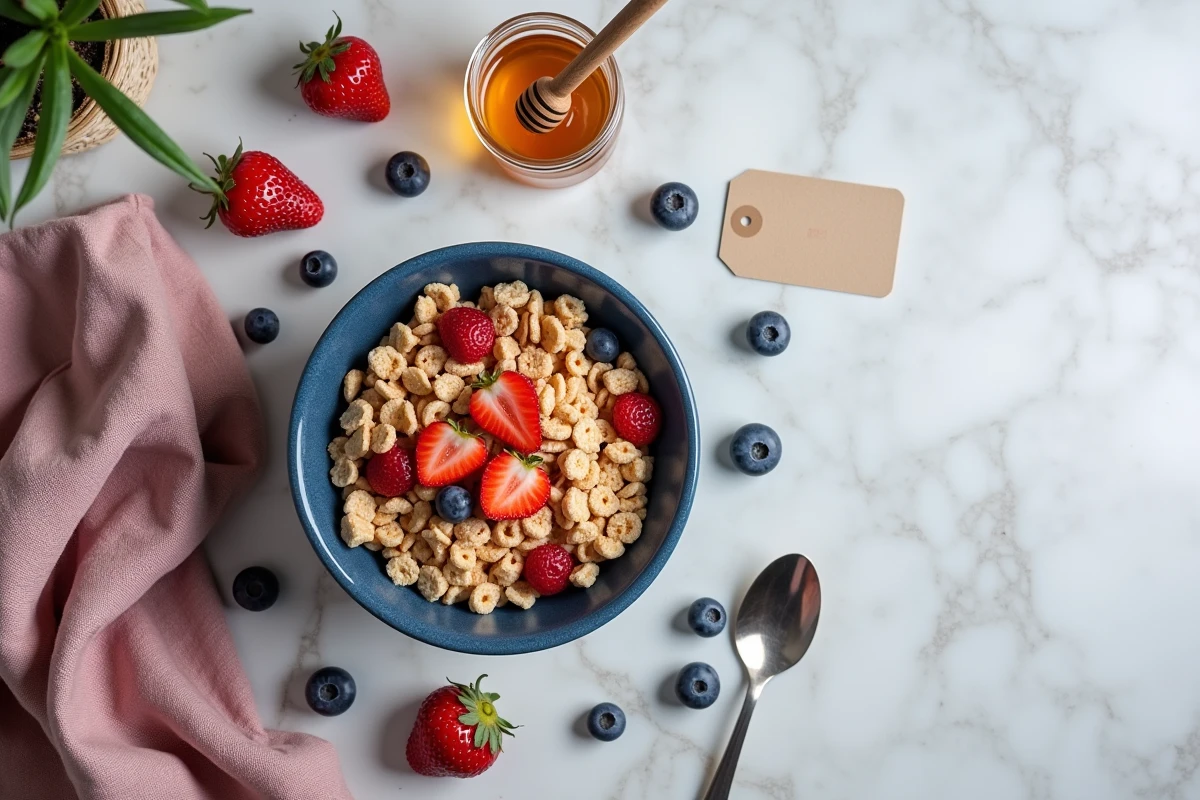
The “Special K diet,” popularized by the brand itself, was based on replacing two meals a day with a bowl of cereal. This approach creates a mechanical caloric deficit, but the weight loss achieved comes from caloric restriction, not from a specific property of the product.
Replacing a full meal with a bowl of cereal with milk mechanically reduces energy intake. Any other cereal consumed in the same proportions would produce a comparable effect. The relevant question is not “Does Special K make you lose weight?” but “Does this breakfast provide enough nutrients to last through the morning?”
Nutritional Balance of the Bowl: Adjustments That Change the Profile
A bowl of Special K Nature with semi-skimmed milk constitutes a carbohydrate-dominant breakfast. To make it a more balanced meal, it is necessary to rebalance the macronutrients:
- Add a source of protein (cottage cheese, soft-boiled egg on the side) to slow down the digestion of carbohydrates
- Complement with a whole fruit rather than juice, to benefit from the fiber of the fruit
- Limit the portion of cereal to a reasonable amount and compensate the volume with foods of higher nutritional density
- Avoid combining Special K chocolate with chocolate milk, a combination that doubles the sugar intake without nutritional gain
A bowl of Special K Nature complemented by proteins and a fruit constitutes a decent breakfast, but not superior to a similarly prepared oatmeal porridge. The choice between the two is more about taste and practicality than a marked nutritional advantage.
Special K cereals remain a mid-quality product in the breakfast cereal aisle. Their main asset lies in their low fat content and accessible taste, which facilitate the adoption of a structured breakfast for those who would otherwise skip the meal. The Nutri-Score and detailed compositions on the packaging are now the best tools for choosing the reference most suited to one’s goals.