
When moving, the question of the lighting in the home being left often takes a back seat. Should one leave the bulbs in place, take their fixtures, or leave everything as is? The answer depends less on a general obligation than on the exact nature of each lighting element and what is stated in the entry inventory.
Bulb, fixture, socket: what each term means for a tenant
The confusion often arises from the fact that three distinct objects are mixed in the same discussion. A bulb is a consumable, replaceable at will. A socket is the technical piece fixed to the ceiling or wall, connected to the electrical circuit. A fixture (ceiling light, wall lamp, pendant) is a complete piece of equipment, sometimes permanently fixed.
The distinction between movable property and accessory fixed to the housing determines what the tenant can take. A chandelier purchased by the tenant and simply hung on an existing hook remains their property. In contrast, a ceiling light sealed to the ceiling upon entering the premises, mentioned in the inventory, is part of the housing equipment.
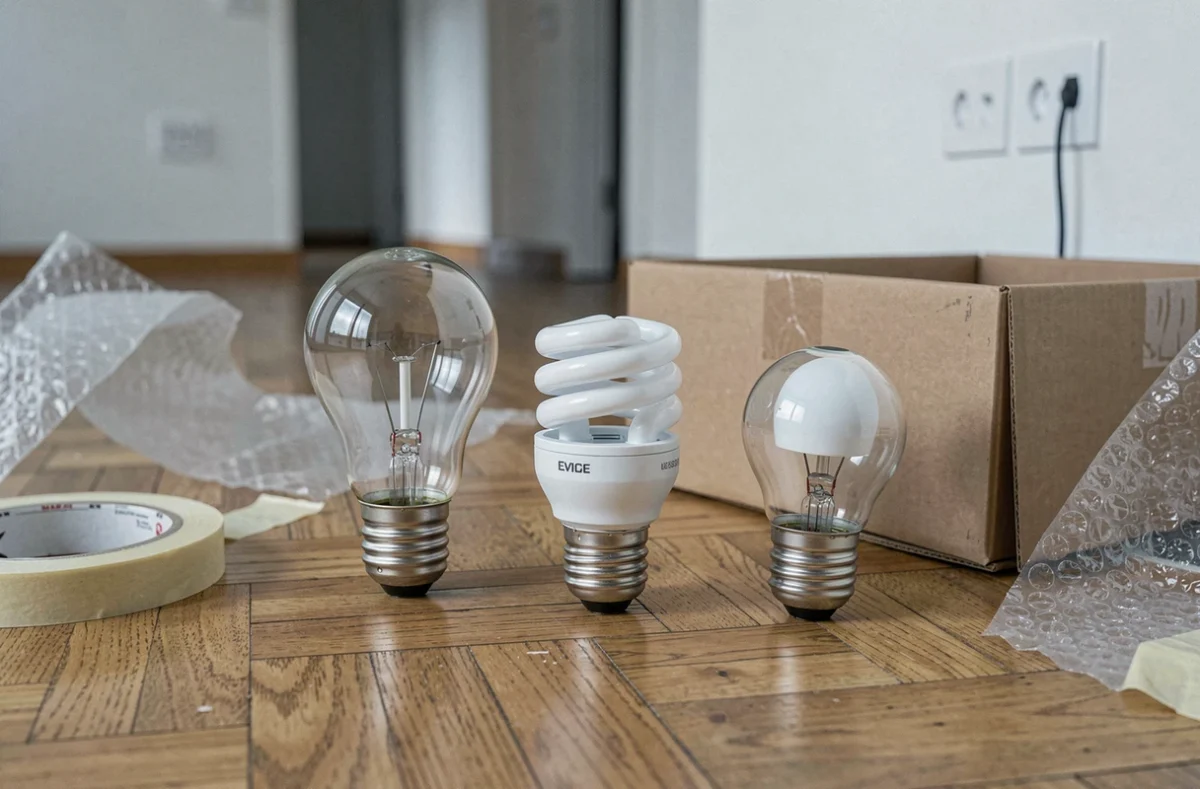
When asking should one leave the bulbs when moving, one must first identify what is consumable and what is a fixed installation. This distinction conditions everything else.
| Element | Common legal status | To leave in place? |
|---|---|---|
| Bulb (screwed into an existing socket) | Consumable, movable property | No formal obligation, but recommended practice |
| Socket fixed to ceiling/wall | Housing equipment | Yes, unless installed by the tenant |
| Fixture present in the entry inventory | Equipment attached to the housing | Yes |
| Fixture installed by the tenant | Tenant’s movable property | No (but restore the original socket) |

Entry inventory: the only document that really matters
No law explicitly states “the tenant must leave their bulbs.” The reference point is the entry inventory compared to the exit inventory. If the entry document mentions “ceiling light with functional bulb” in the living room, the tenant must return the property in a comparable condition.
A vague entry inventory (for example, “lighting” without specifics) leaves more room for interpretation. The landlord will have difficulty justifying a deduction from the security deposit if the initial description did not detail the type of bulb or the presence of a specific fixture.
What the landlord can deduct from the security deposit
A deduction from the security deposit for missing or defective bulbs must be justified. The landlord cannot simply note the absence of a bulb: they must prove that the item was present at entry and is missing at exit. Without a precise entry inventory, the deduction is contestable.
In practice, the amounts at stake remain low for bulbs alone. Disputes more often concern entire fixtures removed by the tenant when they were listed in the entry inventory.
Real estate sale: different rules for the selling owner
In the case of selling a property, the logic changes. The sale contract (or compromise) may specify the list of items included in the transaction. Fixtures fixed to walls and ceilings are generally considered real estate by destination, meaning goods permanently attached to the property.
The seller who removes a recessed ceiling light or a wall lamp without notifying the buyer exposes themselves to a claim. The sales deed and prior visit serve as references. In contrast, a table lamp or floor lamp, even plugged in, remains movable property that the seller can take freely.
Points to check before signing
- Review the sale compromise to identify the equipment listed as included in the price (fixtures, recessed lights, wall lamps)
- Photograph each room during the last visit before handing over the keys, noting the presence or absence of lighting elements
- Request an explicit mention in the deed if a particular fixture must remain or go (antique chandelier, track light, etc.)
Avoiding disputes over bulbs during the exit inventory
The majority of conflicts related to lighting during a move could have been avoided with a few simple precautions. The framework is more practical than legal.
- Replace any burnt-out bulb before the exit inventory: the cost is negligible, and it removes a potential reason for a deduction
- If you installed a personal fixture (pendant, chandelier), restore the original socket or device before leaving
- Keep a copy of the entry inventory with mentions related to lighting, to compare in case of disagreement
- Take dated photos of each light point on the day of key handover
From the standpoint of strict obligations, no law explicitly requires leaving bulbs. The common practice is that the property should be returned in a functional lighting state, out of courtesy as much as common sense. The real risk lies in fixed fixtures removed without restoring the original installation: this is where deductions from the security deposit find a solid basis.