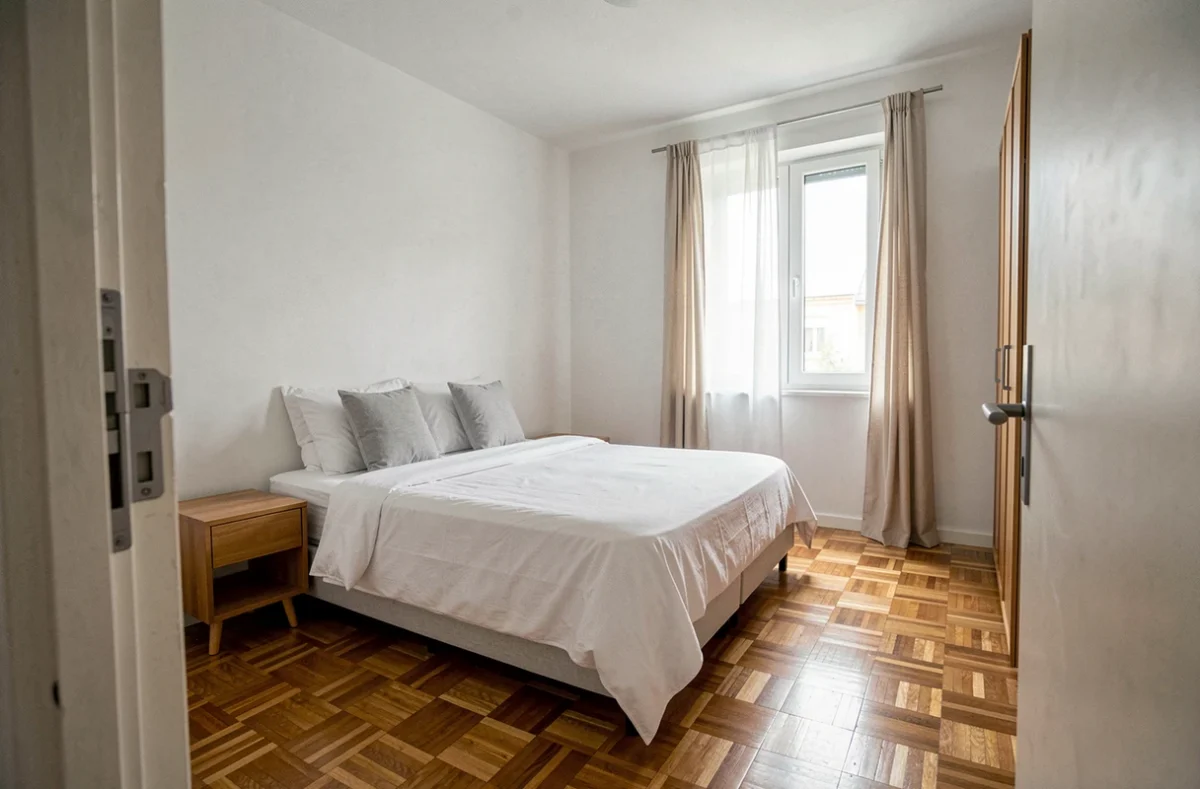
French regulations do not set a minimum size for every bedroom in a home, contrary to what many tenants and buyers assume. The decree on decent housing requires at least one main room to measure 9 m² with a ceiling height of 2.20 m, or have a habitable volume of 20 m³. This distinction changes how you read floor plans and choose a bedroom, whether you are buying, renting or building.
Usable floor area in an attic bedroom: a calculation that can catch you out
In an attic bedroom, the floor area is not the same as its actual habitable floor area. Areas where the ceiling is less than 1.80 m high are excluded from the habitable floor area calculation. A room listed as 14 m² of floor space may therefore fall below 9 m² of usable space once the low-ceiling areas are deducted.
To assess an attic bedroom accurately, measure only the area where the ceiling is higher than 1.80 m. This is the area that determines whether the room meets the minimum standard—and, more importantly, whether it can comfortably accommodate a double bed, a bedside table and enough room to move around.
A detailed article on average bedroom size notes that standard dimensions are around 9 to 12 m² for a single bedroom and 12 to 16 m² for a master bedroom. Under the roof, these guidelines apply only to the actual habitable floor area, not the total floor space.
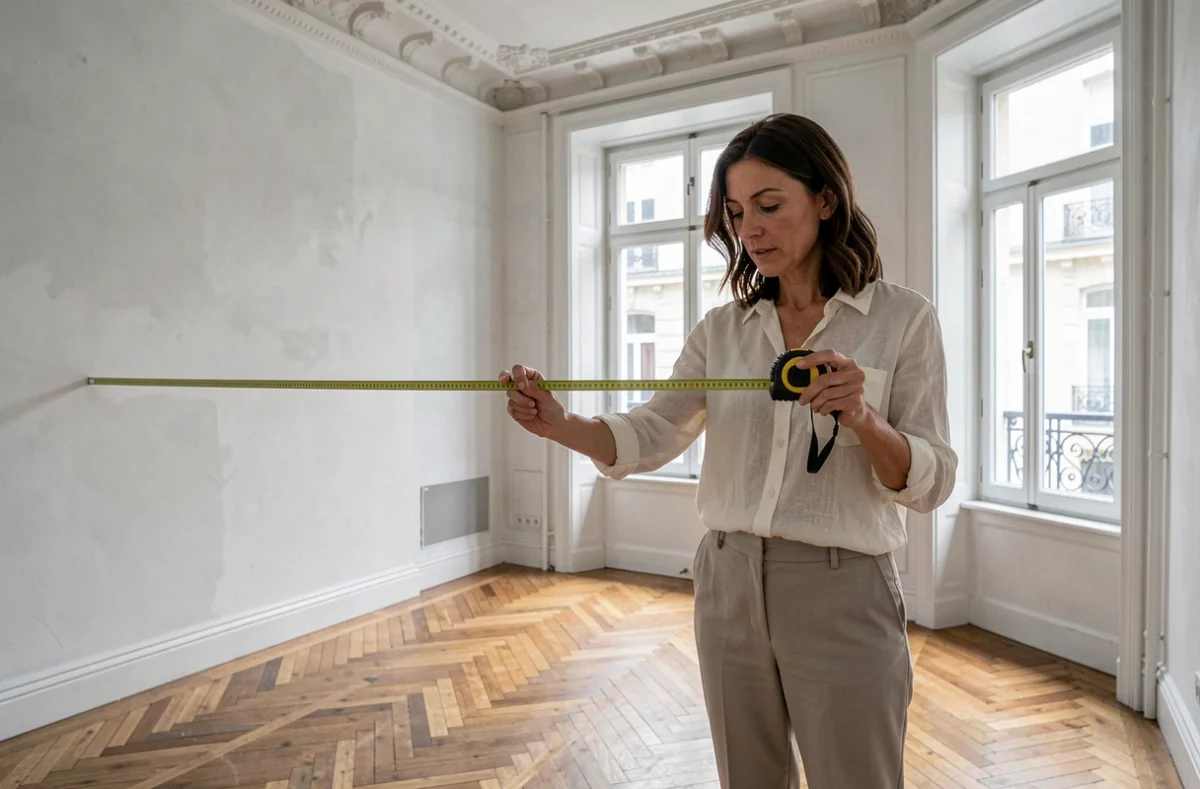
Room in a shared flat with an individual lease: the 9 m² threshold for each private room
In a typical shared flat with a single lease, the decent-housing rules apply to the home as a whole. The situation changes significantly when each housemate signs an individual lease. In that case, the law requires each private room to have at least 9 m² of floor area and a volume of 20 m³.
This distinction has a direct impact on the rental market. A landlord who divides an apartment into separately rented rooms must ensure that each one meets both thresholds. For tenants, checking the ceiling height and exact floor area of their room should become second nature before signing a lease.
What to check before renting a room on an individual lease
- The habitable floor area exceeds 9 m² (excluding areas where the ceiling is less than 1.80 m high), and the volume is at least 20 m³
- The lease specifies the type of agreement (individual or joint lease), as the landlord’s obligations differ
- The room has an opening to the outside and access to shared or private bathroom facilities
Knowing the difference between the two types of lease helps you avoid ending up in a room that is technically unfit under the law, even if it looks habitable at first glance.
Bedroom size and bed choice: why clearance space matters
Most guides recommend leaving at least 60 cm of clearance around the bed. This is the bare minimum. Allowing 70 cm on each side of the bed makes it easier to change the sheets and reach the bedside tables without having to squeeze past.
For a double bedroom, most sources agree that 12 to 14 m² is a comfortable size. The room’s width matters just as much as its total area: fitting a 160 cm bed in a long, narrow 12 m² bedroom (2.50 m wide) is difficult once you allow for clearance on both sides.
How storage affects usable floor space
A wardrobe with hinged doors needs around 90 cm of clearance in front to open. With an L-shaped dressing area or sliding-door wardrobe, no clearance is needed, freeing up floor space for moving around. Your choice of storage affects the minimum practical size of a bedroom just as much as your choice of bed.
In a 9 to 10 m² room, a 140 cm bed paired with a sliding-door wardrobe is still practical. Upgrading to a 160 cm bed in the same space means giving up a traditional wardrobe or reducing the clearance below a comfortable level.
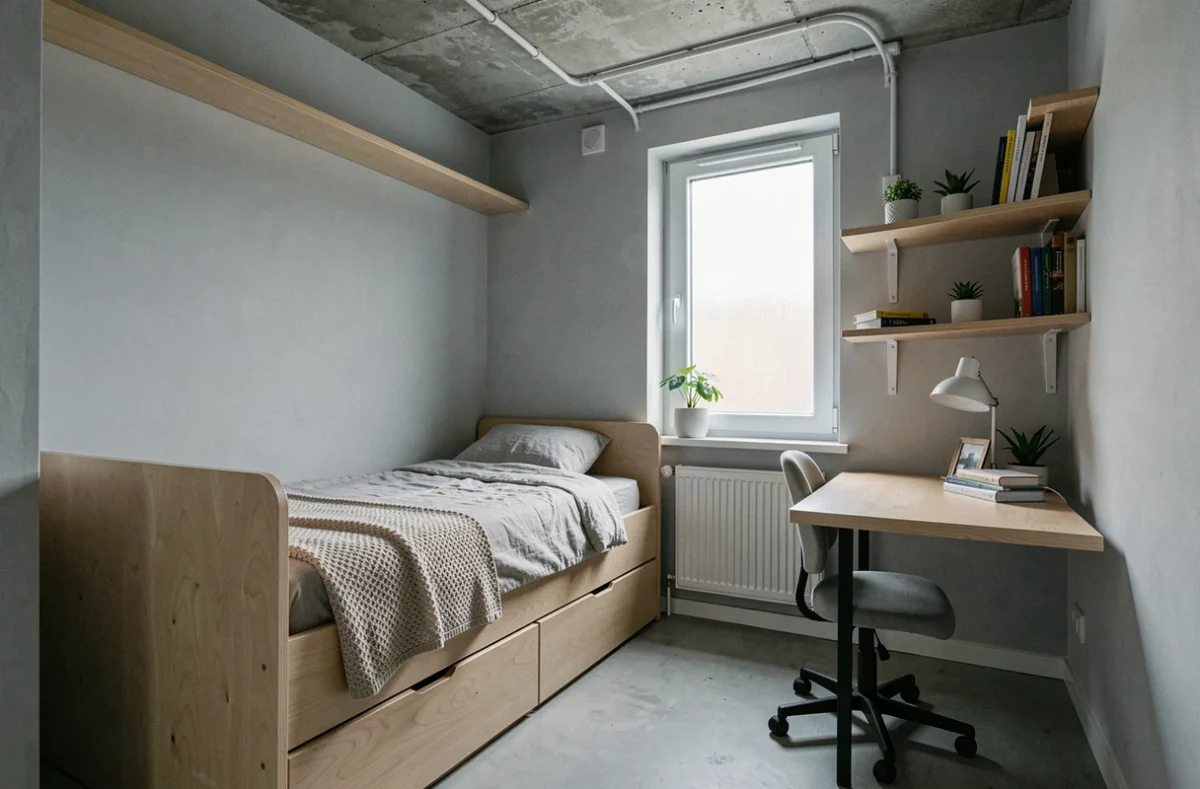
Decent housing: floor area is not the only factor
A spacious bedroom does not guarantee that a home meets the legal standards for decent housing. These standards also cover physical safety (compliant electrical and gas installations), bathroom facilities and, since 1 January 2025, energy-efficiency requirements that exclude homes rated G from the rental market.
For tenants, checking the size of their bedroom is a first step. Comparing this with the energy performance certificate and the condition of the facilities gives a more complete picture of the home. A landlord renting out a room under a separate lease must meet all these requirements for each private room, not just the minimum floor-area threshold.
Master bedroom, child’s room or home office: match the size to how it will be used
It is best to size a bedroom according to its intended use rather than a theoretical average.
- A master bedroom with a 160 or 180 cm bed, two bedside tables and a dressing area needs at least 12 m² of habitable floor area to remain practical, and more if you plan to add a reading nook or nursing chair
- A 9 to 10 m² child’s bedroom is enough for a single bed and a desk, provided you choose high-level storage and a built-in wardrobe
- A multipurpose room (home office and guest bedroom) can work from 10 m² with a sofa bed or a wall bed, but a minimum width of 2.80 m is the real limiting factor
Start with the layout you want and work out the floor area you need, rather than the other way around, to avoid disappointment when you move in. Drawing the furniture to scale on the floor plan, while allowing for door swings and 60 to 70 cm walkways, is the most reliable way to check that a bedroom will work before you commit.